Table of contents
You land with a neat itinerary, a handful of reservations, and the quiet confidence that comes from “doing your homework”, and then a local says one sentence that makes your whole plan feel slightly wrong. In 2026, as European city breaks keep rebounding and travelers lean harder on authenticity over checklists, that off-script advice is often the difference between a trip you document and a trip you actually remember. The twist is that the best intel rarely lives in glossy rankings, it lives in small conversations, and it travels fast.
The best tip often starts as a warning
“Don’t go there at that time.” It sounds minor, even fussy, until you realize how many trips are quietly shaped by timing rather than taste. Locals talk first about flow: when a neighborhood feels like itself, when the light hits a façade, when a market is alive, and when a street turns into a queue. In Europe’s most visited capitals, authorities and tourism boards have spent the past few years trying to spread footfall beyond peak hours and the handful of famous streets, and the numbers explain why. According to Eurostat, the EU recorded more than 3 billion tourist nights in 2023, above pre-pandemic levels, and the pressure is concentrated in predictable windows, which is precisely where the visitor experience collapses into crowd management.
A local’s warning can be as simple as rerouting your “must-see” moment by ninety minutes, and suddenly the same sight reads differently. Instead of arriving at a cathedral behind a wall of tour groups, you catch the quiet hour when residents cut through the square on their way to work, and the place stops feeling like a set. This is why locally sourced advice tends to be operational, not aspirational, and it tends to target friction: avoid the wrong tram during rush hour, book a table in a neighborhood where kitchens still cook for regulars, and don’t try to see three museums in one afternoon because you will see none of them properly. It is practical knowledge, built on repetition, and it often saves money too, because the most expensive mistake in a city break is paying to “fix” a bad schedule with taxis, last-minute tickets, and overpriced meals grabbed in desperation.
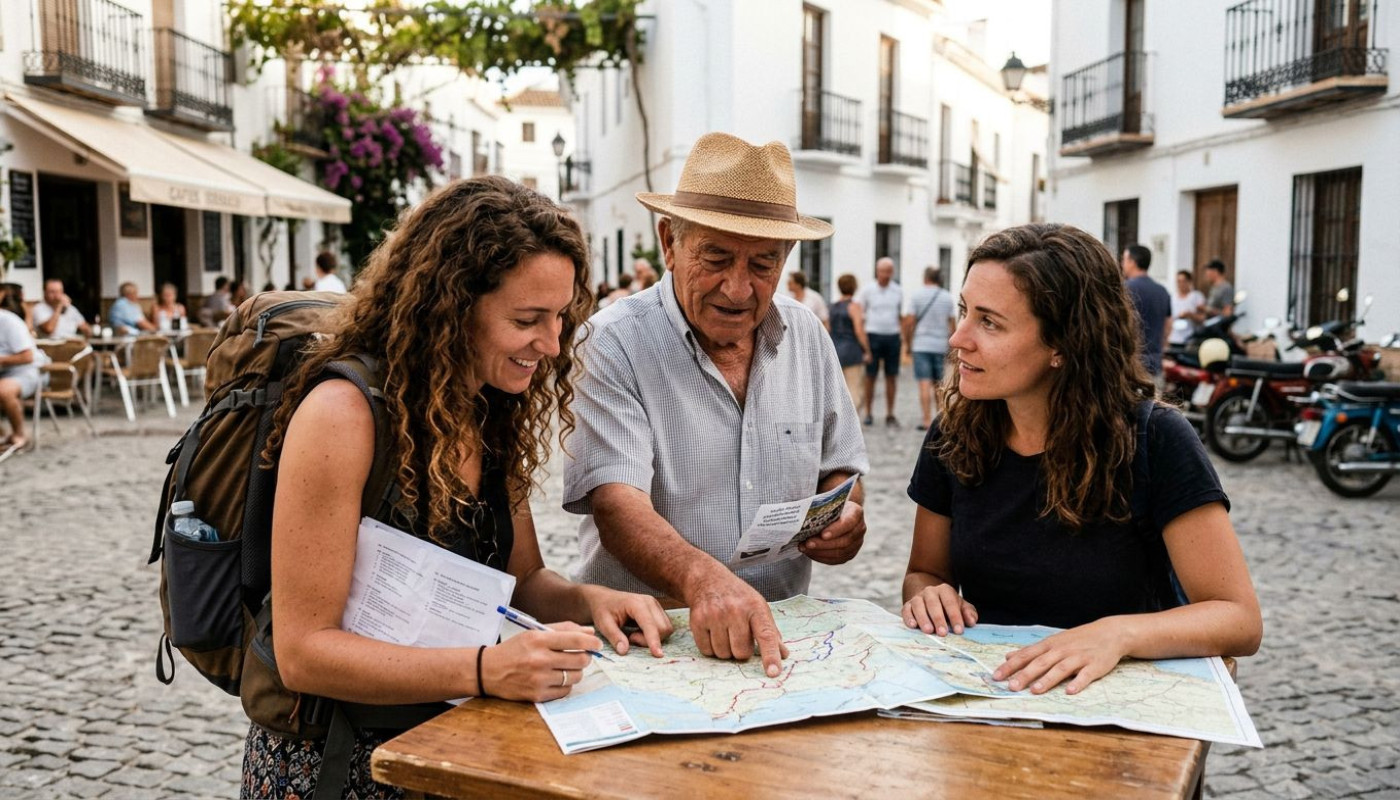
One café chat, and the map changes
It usually happens in a place that isn’t trying too hard: a coffee counter, a bar stool, a small shop where the owner has time to talk. You ask a safe question, “What should I do today?”, and the answer comes back as a story, not a list. The story contains a route, and the route contains values. A local will tell you which park is best when the weather turns, which riverbank actually feels calm, and which street is worth it because people still live there, not because it photographs well. In that moment, your map stops being a set of pins and becomes a sequence, and sequences are what travel memories are made of.
This shift matters more than ever because the way people plan travel has become strangely uniform. Search results compress cities into the same ten “top things”, social platforms reward the same angles, and even well-meaning guidebooks can struggle to keep pace with fast-changing neighborhoods, new openings, and the quiet closures that alter a city’s rhythm. Meanwhile, travelers are returning to shorter, denser trips: in its recent tourism trend reporting, UN Tourism notes that international travel has broadly regained momentum after the pandemic shock, and Europe remains a leading destination, which means the competition for space and serenity is real. Locals respond not by gatekeeping, but by redirecting, pointing visitors toward places that can absorb them, and toward experiences that still feel personal.
That is where a single conversation can rewrite an entire day. You planned to cross the city for an exhibit, and someone says the better version is smaller, closer, and free on a certain evening. You intended to book the obvious restaurant, and a bartender quietly suggests a family-run kitchen two streets away, where the menu is short because everything is made, not assembled. You were ready to spend hours chasing landmarks, and a shop owner tells you to take a long walk instead, because this city’s beauty is in transitions: the way architecture changes block by block, the way the soundscape shifts near the water, and the way locals claim public space after work. It is advice that doesn’t sell you anything; it sells you time.
When “hidden gems” become too visible
Let’s be honest: the phrase “hidden gem” is now a warning label. The moment a spot is described that way on a major platform, it tends to stop being hidden, and it may stop being a gem, too. Cities across Europe have been grappling with the consequences of viral travel, and residents have become sharper about what they recommend, and to whom. They will still share, but the advice often comes with context: go on a weekday, respect the neighbors, spend money in local businesses if you want the area to stay alive, and don’t treat residential streets like an outdoor studio. This is not moralizing; it is the practical politics of living in a place that people consume.
Data backs up the speed of this visibility cycle. Platform-driven tourism concentrates demand with unusual efficiency, and in dense historic centers that can mean instant saturation. Eurostat’s tourism-night figures illustrate the scale of movement, but the lived reality is more granular: queues appear, noise increases, rents rise, and the places that felt spontaneous become managed. Locals respond by updating their own mental maps, and by shifting visitors toward experiences that are less extractive. Sometimes that means nature on the edge of town, sometimes it means an early-morning market rather than a late-afternoon one, and sometimes it means choosing a neighborhood where the economic benefit of visitors is felt without the daily life being displaced.
For travelers, the takeaway is simple, and slightly uncomfortable: if you want advice that is actually local, you have to accept that it may not look like the internet’s version of “best”. It might mean skipping a famous viewpoint because the better one is unposted and requires a longer walk, or choosing a venue with no English menu because the food is worth the small effort. It might mean building your day around one long, unhurried meal, because in many cities the real culture is how people spend their hours, not how they tick off attractions. The most valuable local tip is often the one that makes you do less, and experience more.
How to turn tips into a better trip
So how do you capture this intelligence without turning your holiday into a reporting assignment? Start with the right questions, and ask them in the right places. “Where would you take a friend for one afternoon?” gets better answers than “What’s the number-one attraction?”, and “What should I avoid?” can be more useful than “What should I do?”. Ask a hotel receptionist who actually lives nearby, not just someone reciting a script, ask the person pouring your coffee where they go on their day off, and ask a museum guard what visitors always miss. The goal is not to collect dozens of tips; it is to find one or two that change the structure of your day.
Then, leave slack in your schedule so advice can breathe. If every hour is booked, local recommendations become frustrating rather than liberating. Keep one open morning, plan one flexible evening, and resist the temptation to prepay everything, because prepayment locks you into a version of the city you invented at home. When you do need structure, use a reliable local-facing resource to translate advice into logistics, whether that is figuring out a realistic route, understanding what is open on which days, or bundling key experiences without wasting time. If you are building a break around Riga, for example, you can turn local suggestions into a coherent plan through https://www.riga-trip.com/, then adjust on the ground as conversations steer you toward the city’s quieter angles.
Finally, reward the people and places that help you. Buy something from the shop owner who drew you a map, tip the guide who told you what the city is really arguing about, and choose the small businesses that keep neighborhoods from becoming stage sets. Local advice is not a product, but it has an economy around it, and the simplest way to travel ethically is to spend money where you receive value, and to behave like a guest rather than a consumer. If you do that, the best kind of tip tends to arrive unprompted, because people can tell when you are there to listen.
Your next booking, but smarter
Build your budget around flexibility: one paid highlight, one great meal, and room for detours. Reserve the essentials early in peak season, especially popular museums and small-group tours, and use local guidance to avoid expensive last-minute fixes. Check city passes and seasonal discounts, and look for family or student reductions where applicable; the real savings often come from better timing, not cheaper tickets.
Similar
Why Slow Travel Is Rewriting The Rulebook For Unforgettable Excursions
Why Slow Travel Is Reshaping Our Favorite Destinations

Packing Mistakes Seasoned Travelers Secretly Confess

Exploring hidden gems in the South of France off the beaten path destinations and secret spots
